


Lotus was the trilingual (Arabic, English, and French) journal published by the Afro-Asian Writers Association from 1968 to 1991. Initially headquartered in Cairo, but with the French and English editions printed out of East Germany, the journal relocated to Beirut in 1973 following Anwar Sadat’s peace treaty with Israel and the consequent Arab boycott of […]
Featured
Journals
Featured revolutionary journals, magazines, and newspapers View all journals

The Chinese translation and introduction of African literature in the journal of World Literature (1953-1966) The Chinese bimonthly journal World Literature (shijie wenxue,《世界文学》) was founded in 1953, run by the Chinese Writers’ Association. It was the only journal for translated literature in China before the 1970s. The journal was initially titled Translation (yiwen,《译 文》) [Fig.2] […]
1950

I have titled this set Continental staffriders, liberation bonfires and dance borrowing from South Africa’s infamous literary magazine and cultural organization, Staffriders Magazine published between 1978 – 1993. I will be sharing poems, short stories, interviews, and music that speaks to this Magazine’s epic cultural and political aesthetics. The aim is to pay homage to […]

Historical connections in the Global South: W.E.B. Du Bois and the Cuban Anti-racist struggle for Democracy This paper reconstructs the connections between Du Bois and Cuban intellectuals within global south struggles for anti-racist democracies. The first section shows how Du Bois connections with Cuba occurred both at the level of intellectual collectives and through interpersonal […]
1935

Born two years after the landmark Culture and Resistance Conference, held in Gabarone, in 1982, Vakalisa Art Associates, a flexible group of about twenty artists, formed to reject the idea of the romantic artist and individual genius, opting to produce work with a purpose— art, in its broadest acceptation, that would develop society and contribute […]

Reading Ethiopia in Radical South African Newspapers In this paper, I make a claim for Ethiopia as hidden or overlooked revolutionary trope in South African politics and letters and trace its inscription across selected examples of popular South African newspapers. In South Africa, the idea of Ethiopia has been an important site of pan-Africanist and […]
1930

Schooling the nation through words: reading and writing in the Non-European Unity Movement, 1940s-1950s The production and circulation of newspapers, periodicals and pamphlets by members of the Anti-CAD, All-African Convention and the Non-European Unity Movement (as well as the Teachers’ League of South Africa and the Cape African Teachers’ Association) during the 1940s and 1950s […]
1940
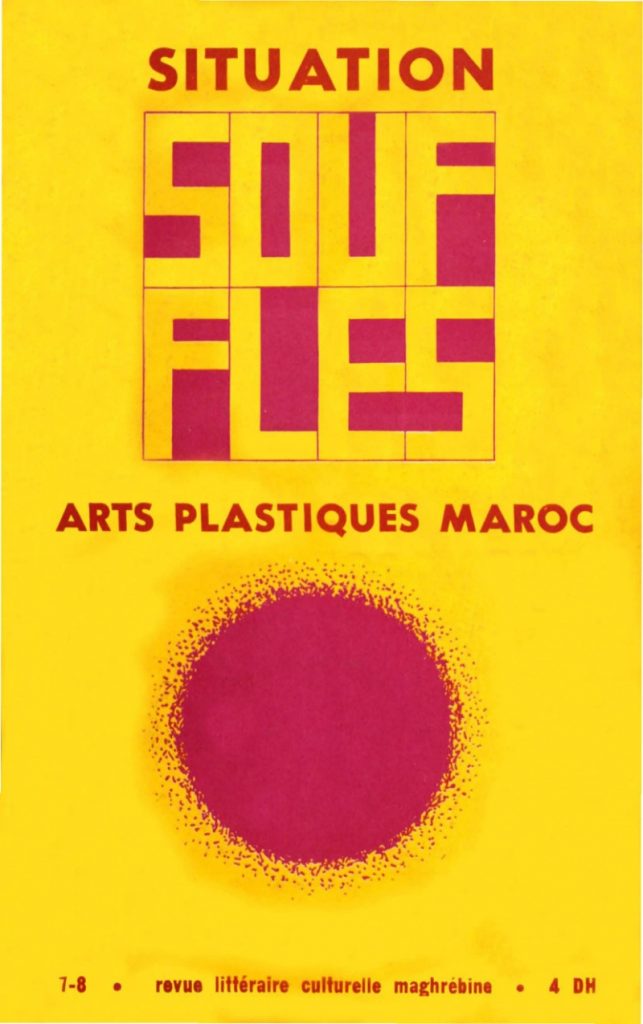
1. Souffles-Anfas The Moroccan cultural journal Souffles-Anfas [breaths] ran between 1966 and 1971, when it was banned by the Moroccan government and its founder Abdellatif Laâbi was arrested, imprisoned, and tortured for sedition. The journal was published quarterly (with some double-issues) and ran 22 issues over its brief history. Modestly priced at 3 Moroccan Dirhams, […]
1930

The Negro World was a newspaper published in Harlem, New York between 1918 and 1933. It was the paper of UNIA, the Universal Negro Improvement Association, founded by Marcus Garvey in 1914.

A Children’s Movement for Change: Izwi Labantwana/Die Kinderstem/ Voice of the Children Izwi Labantwana, Die Kinderstem, Voice of the Children is the official newsletter of the national organisation the Children’s Movement, which had been produced between 1986 and 2017. The newsletter released issues annually in the early 90s, increasing up to five issues per annum […]
1986

Leftist publications centred around political struggles and groups from the twentieth century had specific aims, and clear ideas of the audience and readership, largely due to the constraints on distribution at the time. This definition of audience and readership was at the centre of most anti-colonial and anti-imperialist publications. For them, publishing was an avenue […]
1970
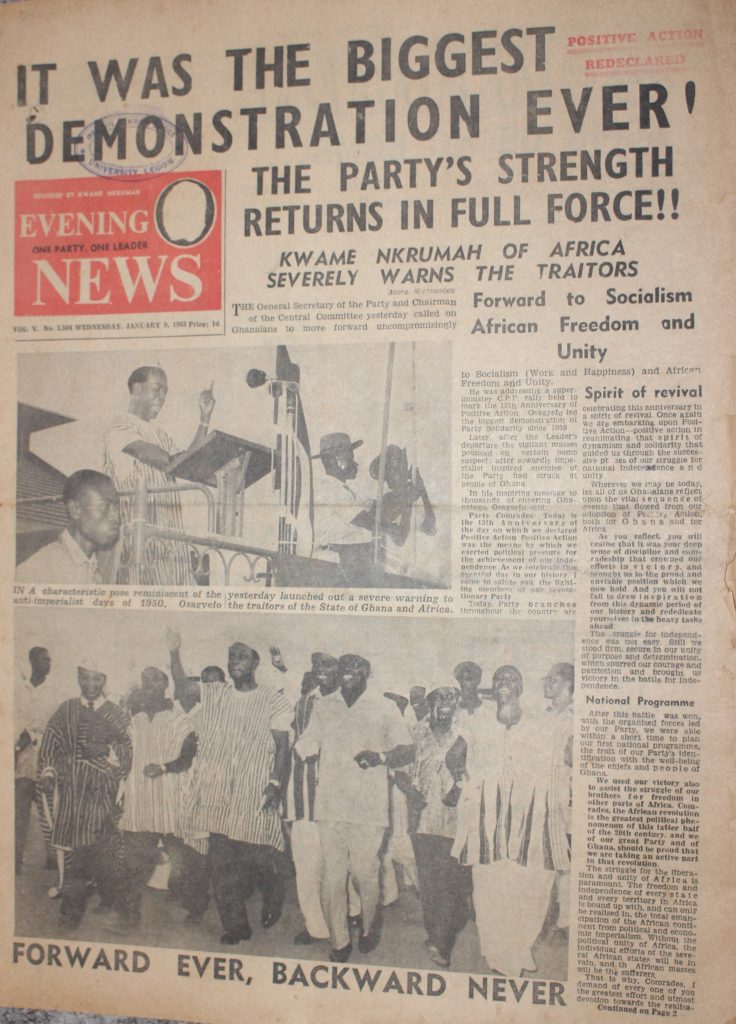
The Evening News: Where Thought and Action Converge The Evening News was established by Dr. Kwame Nkrumah and the Convention People’s Party in 1948 and served as a vehicle to expose Ghanaians and Africans to Pan-African Consciousness. As the mouthpiece of the CPP, the paper spoke directly to three main constitutes‒members, the public and fellow […]
1948
Teaching Tools
Digital resources for teaching and learning about revolutionary periodicals.

Mapping the Social Lives of The Namibian Review

Sawt al-Thawra: A Counterarchive of the Dhufar Revolution
